The Conversations Schools Delay
Why Erika Bare and Tiffany Burns’ A School Leader’s Playbook for Tough Conversations matters in Southern Oregon


At some point in nearly every school year, a principal realizes the problem is no longer the behavior itself. The problem is that nobody has addressed it directly.
By October, substitute teachers already know which classroom assignments to avoid. And by winter, everyone knows which faculty meetings will turn sour before they even begin. There is the caregiver who now walks into the front office already prepared for conflict because trust with the school has been worn down. Most people inside the building recognize the tension long before anyone names it aloud.
In schools, avoidance accumulates quietly.
A School Leader’s Playbook for Tough Conversations by Erika Bare and Tiffany Burns begins from that recognition. The book stays close to the emotional mechanics of school life: the meetings people dread, the conversations delayed too long, the strange culture that develops when adults begin managing tension indirectly instead of addressing it openly.
Burns spent twelve years as a building principal before moving into instructional leadership coaching and faculty work inside the Southern Oregon University School of Education. Her sections carry the accumulated texture of site leadership: caregiver conflict, staff morale problems, difficult evaluations, and the mood unresolved tension leaves behind in a building. Bare’s influence appears most clearly in the book’s systems thinking, especially around coaching structures, practical intervention strategies, and diagnostic frameworks that separate problems of professional skill from problems of professional will, a distinction that grows more urgent in districts managing staffing shortages where there are too few teachers to absorb the cost of mismanaged exits. Together, they write like administrators who understand how quickly unresolved tension changes the atmosphere of a school.
That familiarity with consequence gives the book its authority.
The strongest sections understand something many educational leadership programs still struggle to confront honestly: schools are emotionally loaded institutions where adults routinely avoid saying what everyone already knows.
Most educator preparation programs devote enormous attention to curriculum, instructional design, standards, assessment, and pedagogy. Almost none goes to the realities that dominate administrative life once someone actually enters school leadership.
Few future administrators are trained to sit across from a struggling teacher and explain clearly that things are not working. Fewer are prepared for the slow exhaustion that develops when conflict is managed indirectly for months at a time. Schools become skilled at preserving surface harmony while quietly reorganizing themselves around unresolved problems.
That silence is where the book does its best work.
Early in the book, they state plainly: “If someone needs to address poor performance or tell a hard truth, that someone is you.” No amount of mission statements, strategic planning language, or institutional optimism changes the basic reality that schools eventually become shaped by the conversations adults refuse to have.
Silence hardens into culture surprisingly fast.
One of the book’s central ideas, “Care Out Loud,” works because Bare and Burns refuse to treat care as sentiment. They frame care as responsibility instead. To avoid difficult feedback is to leave another adult without clarity while students absorb the consequences.
When specificity disappears, the building fills the gap with something worse. Expectations blur. Staff begin interpreting tone, omission, and hallway rumor instead of direct communication. Distrust settles into routine behavior long before anyone formally acknowledges it.
Bare and Burns make the case that organizational culture is shaped by the worst behavior leadership is willing to tolerate. Inside schools, where adult behavior establishes emotional conditions for everyone else in the building, avoidance becomes permission.
That observation carries particular weight in Southern Oregon, where school leadership rarely ends when someone leaves campus. Principals run into families at football games, restaurants, grocery stores, and community events. Teachers often work in the same districts where they were once students themselves. A difficult conversation at school does not disappear once someone leaves the parking lot.
In a region where a principal may encounter an enraged caregiver later that evening at the Ashland Safeway or a local Grange event, the book’s advice to lower one’s voice, slow the pace of speech, and deliberately unmatch the other person’s emotional register becomes more than a management strategy. It becomes part of maintaining civic relationships in places where trust remains deeply personal.
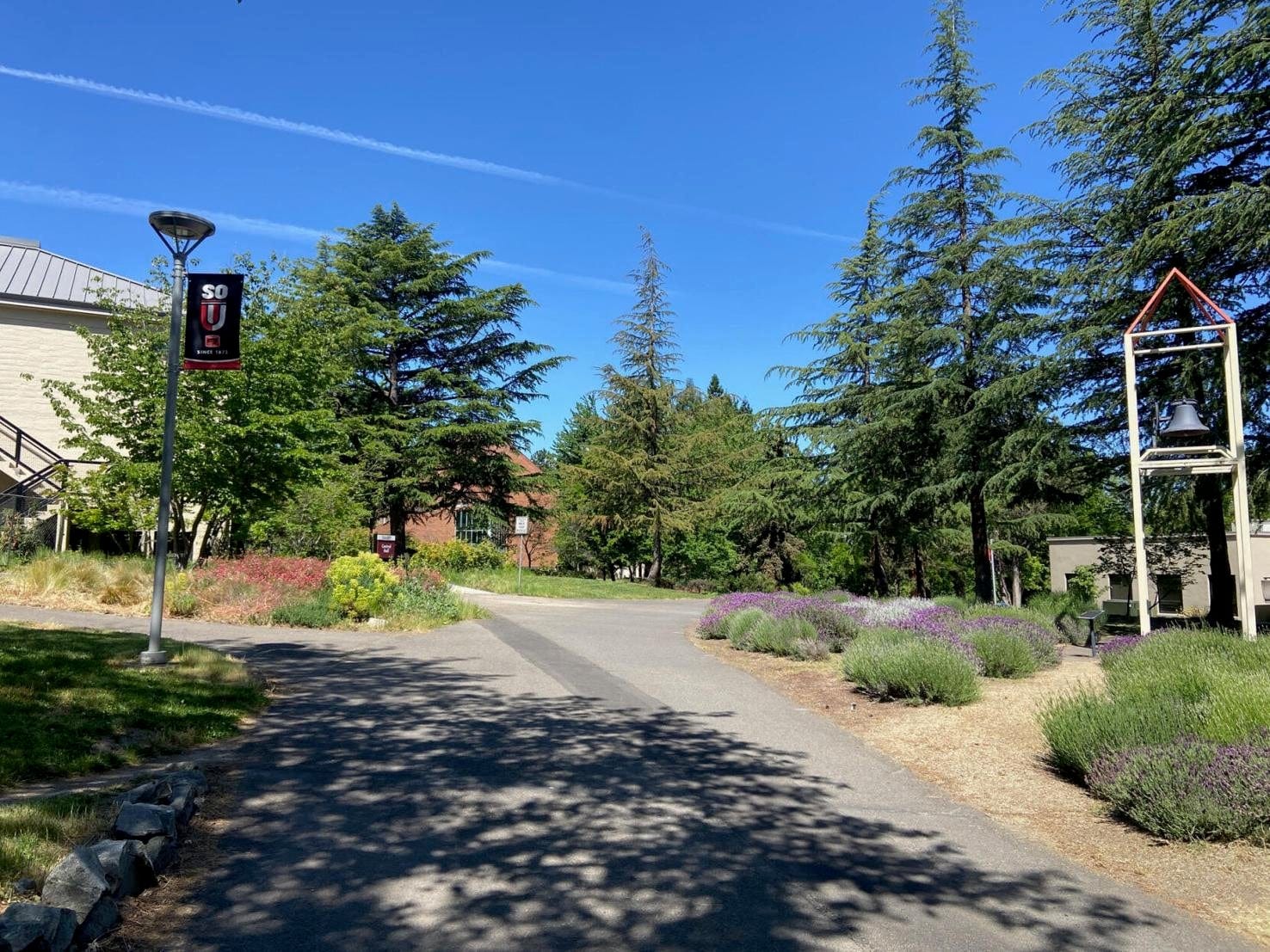
That regional context also explains why Burns’ role at Southern Oregon University carries practical weight. Future administrators in Southern Oregon are entering schools where professional conflict rarely stays contained to campus boundaries. Educator preparation here operates inside communities worn down by burnout, staffing shortages, political tension, and declining trust in institutions generally. In that environment, difficult conversations become part of keeping already strained schools from drifting further into distrust.
For students preparing to enter school leadership through Southern Oregon University’s School of Education, the book reads less like abstract leadership theory than preparation for the emotional and relational realities waiting inside actual schools.
Some of the book’s strongest passages examine the stories adults tell themselves in order to postpone conflict. Leaders convince themselves they are preserving relationships when they delay difficult conversations. Bare and Burns argue the opposite. More often, adults are preserving their own comfort.
The repeated phrase “Clear is kind. Unclear is unkind” carries force because the authors place it inside recognizable behavior. Schools are full of softened language, delayed criticism, vague evaluations, and carefully managed ambiguity. Entire buildings learn to communicate through implication instead of clarity.
One especially effective section examines administrators withholding concerns until final evaluations. Bare and Burns are blunt about the damage this causes. Feedback withheld does not protect teachers. It leaves them isolated inside problems leadership already recognized months earlier.
Their example of “Ms. Bloom,” a novice science teacher struggling with classroom management and off-task behavior, becomes one of the clearest examples in the book of leadership as intervention rather than punishment. One administrator avoided specificity and nearly lost her. Another used direct observation, repeated coaching, modeling, and concrete feedback tied to classroom practice. The shift from avoidance to specificity did not just improve her teaching; it was the single factor that kept her in the profession.
What keeps the book grounded is its attention to practical mechanics. In one section, Bare and Burns recommend introducing a “third point” into difficult conversations by physically placing something observable between participants, a crumpled work sample, a confusing data printout, a lesson plan with problems already circled, so the conversation has somewhere to land other than the space between two people.
It is a small maneuver. It is also diagnostic of how the whole book thinks. Bare and Burns consistently resist abstraction. They remain focused on the physical realities of school life: where people sit, how voices change under pressure, how meetings escalate, how adults avoid embarrassment, how trust weakens slowly before collapsing all at once.
They also refuse to pretend these conversations become easy with experience. Difficult conversations remain emotionally draining even for veteran administrators. Leadership here looks less like charisma than endurance. Even experienced administrators still rehearse these meetings in the parking lot beforehand.
Schools rarely fracture through a single dramatic event. More often, deterioration happens slowly. Through conversations postponed another week. Through expectations left intentionally vague. Through adults learning to speak around problems instead of through them.
The difficult conversation is usually delayed for the same reason people delay most painful things: everyone hopes the problem will quietly solve itself overnight.
Schools know better than most that it rarely does. Students usually pay for the delay first.
By Bryce Smedley PhD
Faculty, Southern Oregon University